
Fiddle & Fettle's Building a Website Guide
Hosting
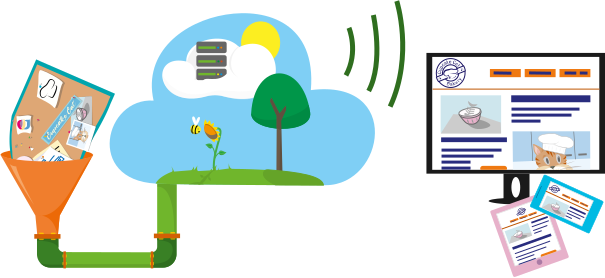
Web Hosting is a service that stores the data files that make up your website. Such as text, image and photo's etc on a web server. It then allows your website contents to be accessible via the World Wide Web using your Domain Name. Many hosting companies offer different kinds of hosting. The most likely ones that you'll come across are:-
- Shared Web Hosting
- Dedicated Hosting Service
- Managed Hosting Service
- Cloud Hosting
Shared Hosting Service
Generally this is when your web hosting company stores many website's at a time. Each one stored separately but altogether on one single server. They will then have multiples of these servers. This is generally the cheapest type of set price hosting you'll find. Which means with some companies the features available are only basic. Also not flexible in regards to software, updates and usage.
When buying hosting always check how much data transfer allowance (bandwidth) you are allowed. This is important if your website has a lot of customer interaction e.g. downloadable files like pdf worksheets. As this will cause a lot of interaction with the server. This then uses more transfer space in comparison to a website with only readable text.
If you exceed your bandwidth allowance you could be charged for the extra usage. Your provider might also limit the access to your website or even stop it being available. By temporarily suspending your account until your next monthly payment is received. Not so good if you have a spike in site traffic near the beginning of your billing period. Or they may suggest / push you to move to a more costly package option.
Due to the constraints with this way of hosting many Hosting companies are now moving their shared hosting to Cloud based technologies giving them far more flexible resources and greater reliability.
Dedicated Hosting Service
This is where you have a web server for only your website but it will still belong to the hosting company. You will then have full administrative access to the server. Plus also be responsible for it's security and maintenance. This is not an ideal option for most. Unless you have the need for a server of your own due to size and usage of your website. Also the knowledge and ability to manage it.
Managed Hosting Service
A Managed Hosting Service can be on a dedicated or shared server. But someone else maintains it's security and maintenance for you. Though you still have access to upload and make changes to your website files. They will also watch your websites activity increasing the bandwidth needed if necessary.
Some managed services also offer to take care of the deployment of your website, plus all future changes and general maintenance to it. Allowing you the peace of mind to concentrate on the day to day running of your business.
Cloud Hosting
Cloud Hosting is when the hosting company uses clusters of servers at a time. Instead of one single server to host your website. This allows the host to minimise any downtime your website may experience. Because if one server fails another will work in it's place. Helping to keep everything running smoothly.
Another advantage of this is it's scalability. If your website should become busier than usual. Then more servers from the group will join it working together to cope with the added activity. Unlike a shared server where access to your website can be throttled or temporarily suspended.
Cloud Hosting also only charges for the resources your website is actually using. Usually on a monthly basis. Making it a more cost effective way of hosting for websites that have spikes of activity.

Tom's Website
On my advice Tom's website is going to be hosted with a Managed Hosting Service. This will be more than adequate for his static websites needs. He will also have the peace of mind that all software and server security will be taken care of.
Basics of a Website
There is much more to Hosting but this covers the basics of what most people will come across. Next Tom wants to know about SSL.
 Top of Page