Fiddle & Fettle's Building a Website Guide
Design
The design and build of your website is a tricky one as you can either diy it or commission a Web Designer to do it for you (my personal favourite but I maybe bias!). There are many factors that can influence which route you choose to take. Though these are the key points you should consider before choosing:-
- Your product / service
- Your target customer / audience
- Budget
- Regular need to update content or not
- Future expansion
Self Build
For the self builder there are many online web-builders available to choose from. Whilst they all offer varying good results there are pro's and con's with self building.
Costs
Some offer cheap deals or draw you in advertising freebies for the first year. Great right!? Well yes but be aware there's often many hidden monthly costs which at first may not have been clear. As the cheap deal will likely be for only the very basics and all extra features will incur an additional charge.
You could also find you have to use their domain register and hosting. Well that's okay as they're offering the first year cheap / free! Yes but you may find yourself tied into a 2 or 3 year deal. Where the price increases considerably in these following years.
Templates
Web builders tend to be based around preset templates. Which on one hand is great as you don't need to be able to code and your layout is pretty much ready to add your content to. But it could mean you are limited to how it looks and how things are placed around the page. Also don't be fooled into thinking it won't be much work! Even using a preset layout can be time consuming and not always as straight forward as you're led to believe.
Your websites speed and performance can also be effected. This is because many websites built this way will still load unnecessary parts of the framework / code. Parts you may have chosen not to use which makes it performance heavy. Meaning it is slow to load and can take up a lot of the users data bandwidth. This is not ideal especially for the mobile user. This is why one of the many parameters measured by Google now is load speed. Being slow will cause you to be lower down in their rankings.
Content
One advantage of web-builders is they may offer stock images and logo libraries. These are the ideal solution for those who don't currently have the budget to get a bespoke company logo / branding designed or have their own photos. One big disadvantage is you may end up looking pretty much the same as many other competing websites. Which won't help you to stand out in your chosen market.
Website Designer
Not all Design Agencies are the same or offer you the same service / end product. If you are looking to go down this route you should ask around, get recommendations or research websites you like and find out who created them (or hire me!).
The design process of a designer may differ from one to another but in general it will roughly follow like this.
An initial meeting in which you discuss your website requirements covering.
- What your business does - It's services / products
- Who your target customer / audience is
- Company branding - do you already have or need branding
- Budget
- Type of features your website may require
- Regular content updates - would you need a CMS to make regular content updates
- Future expansion
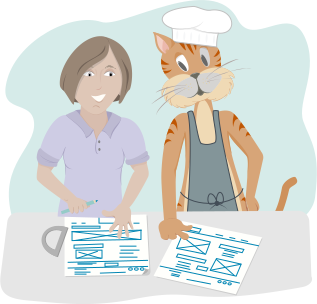
They then take this information away to help either work out a quote (unless they offer fix rate deals). Or some rough design ideas followed by a quote. Next you would agree on a design. They would then take that and mock it up for your approval and any changes. Before building the framework of the website. In the meantime they will need you to provide content before they go ahead and do the final build.
Some may charge a fee for their initial meeting. This is normal especially if the potential client chooses not to use their services. As some go quite in-depth with their research questions and brainstorming initial ideas. To help them work out your requirements and quote for your project.
Style Guides
Some agencies offer only a design service (or style guides). This means they only create the style of the website such as colour palette, font styles and layout patterns. They may however then use a freelance developer or company to do the programming build and deployment of the site. Or you may be required to find this for yourself which is ideal if you already have a Web Developer in your back pocket!
Frameworks & Templates
Correctly used frameworks and templates may be the ideal option for your website. All depending on it's purpose and the functionality needed.
But you need to be aware that some Web Design agencies. Only produce websites using the one framework template they may have bought years ago. Which they then make your contents fit into whether its suitable or not. Or may use free third party templates whilst claiming to be building you a bespoke website (not so good!). More experienced reputable ones will use a framework as a base to build and adapt from. Producing well designed bespoke looking websites. Whilst being open and upfront about this and their design process.
With some frameworks e.g. WordPress you have available many useful third party plugin features. These can either be payable for or free. Its best to be aware if these have been used though as it can effect the reliability of your website in the future. As your designer will not have control over whether that software will be Maintained, Security updated or even turned off in the future. Failure to do any or all of these could cause your website to not work properly, or at all.
CMS & Ecommerce
Depending on the type of business you run. You may need your website to be built using a Content Management System (CMS). This will allow you to manage your website content via a Admin Control Panel. From here you can make regular changes and updates to your websites contents. Depending on your type of business this could be blog posts, special offers or new sale items. Many CMS on the market offer Ecommerce ability so you can manage a online shop. Your Designer may use one of these and either integrate it into your website. Or create you a custom theme for the chosen CMS.
Bespoke Design
There are also many like myself. Who don't use third party frameworks or templates as a general rule. Instead we concentrate on creating bespoke hand-coded websites. Meaning each website is designed and coded to fit that particular customer. Many experienced designers will have their own set of starter files to help speed up production. But unlike other frameworks these will just be base elements needed to build on to create your website.
But hand-coded is more expensive than using a pre made framework isn't it? No not really. Many designers and agencies will be happy to work within a set budget. Whilst still creating a website that is suitable to your needs. Good design should be affordable for all especially the small or start-up business.
This doesn't mean we don't integrate CMS and Ecommerce frameworks into our designs. We're just likely to choose one that we can adapt to your needs without compromising the websites performance.

Tom's Website
As you may have guessed Tom has chosen to use a designer and has wisely picked me!
We've so far had our initial meeting where I took details all about his:-
- bakery & shop
- What he sells
- Who his target customers are
- his current budget
It also became clear that currently he wants the website as a marketing tool only. As he's not looking to sell online at the moment. Though he doesn't want to rule out that option in the future. So I will need to keep this in mind while designing his site.
We also looked online together at a few different websites. From this I was able to collect lots of information about different elements of design style, colour and functionality he likes. Though my design will be focused on attracting the bakeries target audience. I still also need to be sensitive to Tom's brand vision and tastes and look at how I can incorporate them into my design.
At our next meeting I was able to presented him with two sketched wire-frame design options. We then had an in depth discussion about the designs and about which we thought would work best to showcase his business. We then discussed the changing or removing some of the designs elements he wasn't fully happy with. Also about adding some other new features we both thought would work well.
So from the decisions Tom made I was able to take them away and make a working mock-up of the design ready for our next meeting. He was tasked with thinking about the sites contents.
Basics of a Website
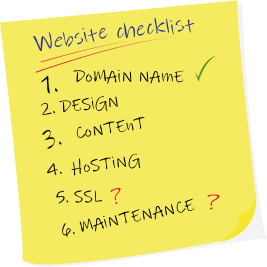
Hopefully that covers just enough about the different ways / styles of designing a website to help you along with making your choices. Unfortunately it's a huge subject with many different options so go with what feels right for you. Next on the list is website content.
 Top of Page